


/file/publisher-c1a3f893382d2b2f8a9aa22a654d9c97/2026/06/f3cf467012624738f54e9222ac756e3e.jpg)

'No US-style anti-migrant movements': Saifuddin urges govt to solve Rohingya issue
INTERVIEW | Former foreign minister Saifuddin Abdullah has urged the Home Ministry to present a ministerial statement in Parliament on Putrajaya’s refugee policy, amid a surge in online hostility against such communities.
Cautioning that unaddressed public anxieties risk spiralling into extreme anti-immigration sentiments akin to the situation in the United States, the newly minted secretary-general of Parti Wawasan Negara called for the minister to engage with other lawmakers knowledgeable on the matter.
In particular...
INTERVIEW | Former foreign minister Saifuddin Abdullah has urged the Home Ministry to present a ministerial statement in Parliament on Putrajaya’s refugee policy, amid a surge in online hostility against such communities.
Cautioning that unaddressed public anxieties risk spiralling into extreme anti-immigration sentiments akin to the situation in the United States, the newly minted secretary-general of Parti Wawasan Negara called for the minister to engage with other lawmakers knowledgeable on the matter.
In particular, Saifuddin recommended engagement sessions with DAP MPs Syerleena Abdul Rashid and Yeo Bee Yin.
Syerleena chairs the All-Party Parliamentary Group (APPGM) on refugee policy while Yeo heads the Parliamentary Special Select Committee (PSSC) on Women, Children and Community Development.
“Make a statement as soon as possible (once the Dewan Rakyat reconvenes). At the very least, the statement should reassure (the public).
“Otherwise, we don’t know what will happen - we don’t want anti-immigration movements like what you see in the US,” Saifuddin, who also sits on the APPGM, told Malaysiakini in an exclusive interview on June 19.

The second meeting of the 15th Parliament is scheduled to take place between June 22 and July 16.
Saifuddin, throughout his tenure as the foreign minister, has consistently championed a humanitarian, rights-based approach to the Rohingya crisis.
Hate campaign
On June 11, Malaysiakini reported that a petition calling for the Rohingya to be removed from Malaysia was taken down for review by Change.org, following criticism from civil society groups towards the latest hate campaign against the persecuted community.
The petition appeared to be part of an online disinformation campaign against Rohingya refugees, with the issue believed to have sparked after a social media post claimed that a “Rohingya Malaysia President” had requested that Selayang be used as a settlement for the community.
The poster, made up to look like an official news bulletin, was shared by Deputy Prime Minister Ahmad Zahid Hamidi’s daughter, Nurulhidayah.
READ MORE: No room for 'ketuanan': Saifuddin bets on principled unity to win non-Malay trust
A significant portion of the commentators on the original post called for the community, which had been exiled from their native Rakhine state in Myanmar by force, to be “chased out” of Malaysia, with some individuals taking it upon themselves to share videos of them publicly harassing children believed to be refugees.

Pusat Komas founder Jerald Joseph told Malaysiakini that while the latest campaign against the Rohingya seemed like a coordinated effort, such suspicions are hard to verify and would require expert skills, such as those held by the MCMC, which is empowered to halt such behaviour.
On June 16, the Home Ministry rejected allegations that Malaysia treats migrant and refugee children, including Rohingya children, inhumanely.
In a statement, the ministry said claims that children were detained without protection or denied basic welfare did not reflect the government’s efforts to manage irregular migration.
‘Come clean on refugee policy’
Saifuddin, however, said the issue goes beyond allegations of mistreatment, pointing to longstanding gaps in policy implementation which could hinder the government’s ability to respond effectively to an increasingly hostile public mood against the refugee community.

He noted that during former prime minister Ismail Sabri Yaakob’s administration, the government had worked on the National Security Council (NSC) Directive No 23, which identified four key areas for improvement in the handling of refugees, namely health, welfare, education, and employment.
However, the cabinet approval required for the directive to be implemented was not received before Parliament’s dissolution in October 2022.
While media reports indicate that a version of the directive was later approved by Prime Minister Anwar Ibrahim in June 2023 to oversee and manage all matters related to refugees and asylum seekers in Malaysia, Saifuddin said details on the matter remain undisclosed publicly.
“I understand that the current government and cabinet have since decided on it, but I have been searching high and low to see the official text (on the directive), which I haven’t yet seen.
“I am willing to help the current government because we are all in this together. We (opposition MPs) can’t say much now because we don’t really know what is actually happening, what the government is actually doing,” the Indera Mahkota MP said.
In a Feb 17 statement last year, Suhakam had expressed concerns over the directive remaining a “confidential document” to the public, with the commission arguing that a policy of public interest and importance should not be a “state secret”.
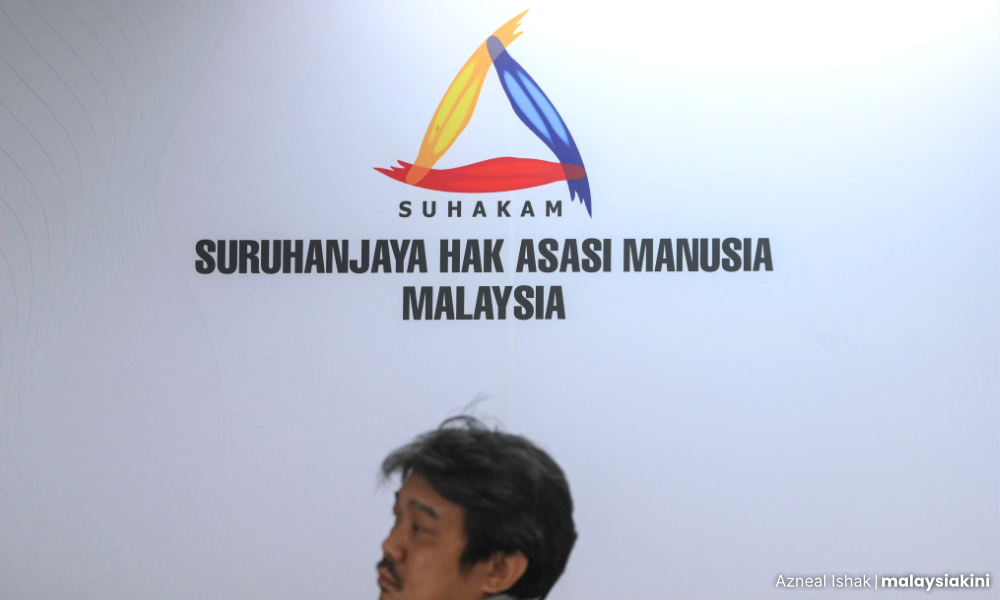
“We are perplexed by this secrecy. What is the rationale? Good governance and the principle of transparency dictate that the government must be transparent in this matter,” Suhakam said.
It also said that while short-term policies provide immediate albeit limited “relief”, they must be followed by a comprehensive legal framework to ensure sustainable and rights-based solutions for refugees.
Because Malaysia is also not a signatory to the 1951 UN Refugee Convention or its 1967 Protocol, refugees here lack formal legal status and rely entirely on domestic policies like the directive for management and protection.
READ MORE: 'M'sian face, not multiracial mask': Saifuddin details vision behind Hamzah's new political venture
South China Sea and Asean
Separately, Saifuddin also weighed in on the upcoming 10th anniversary of the July 12, 2016, South China Sea arbitration ruling, which was adjudicated under the UN Convention on the Law of the Sea (UNCLOS).
The ruling, stemming from an arbitration case unilaterally initiated by the Philippines, invalidated China’s expansive “nine-dash line” claims over roughly 90 percent of the South China Sea.
Beijing has formally declared the ruling null and void, claiming it is legally invalid and inherently incapable of resolving the dispute due to its ultra vires nature.

While the Philippines had recently raised the issue on several international and Asean platforms again, Saifuddin agreed that the Philippines’ action has fueled geopolitical friction and escalated regional tension, inviting foreign power intervention.
Saifuddin said Malaysia’s position remains unchanged, particularly on adhering to the UNCLOS, rejecting the nine-dash line, and insisting that disputes involving external powers should be handled collectively through Asean rather than unilaterally.
Such an approach, he said, is especially relevant given the Philippines’ 2024 submission to the UN Convention on the Limits of the Continental Shelf (CLCS), in which Manila staked a claim to an extended continental shelf in the South China Sea.
The submission drew immediate protest from Kuala Lumpur, which categorically rejected it on the basis that the Philippines’ continental margin was projected from the baselines of Sabah, territory over which Malaysia asserts indisputable sovereignty.
“Whatever happens with the Philippines must be discussed in the Asean context. As long as we follow these three principles, I think we can avoid any reactive posturing from any side,” the former foreign minister said.

Asked whether Beijing would remain passive given Manila’s moves, Saifuddin said Asean’s collective approach was precisely its strength, insisting that as long as member states refrain from engaging China unilaterally, outside powers have no foothold to intervene.
He also cautioned against inflammatory language, saying Malaysia has always avoided statements that could provoke escalation, with sensitive territorial matters best handled through established bilateral and multilateral channels rather than public posturing.
“We have always applied all kinds of diplomatic instruments with China, bilateral meetings, four-eyed meetings… We can file complaints, but we normally don't make too much noise.
“Making too much noise usually doesn't help,” he said.
“That is why we always decided this has to be an Asean thing, then Asean centrality will become automatic, Zopfan (Zone of Peace, Freedom and Neutrality) will be there. Yes, China is a superpower, but we wholly discuss with China; others do not need to come in.
“The Asean way of doing it when involved with superpowers is to use the diplomatic channel, and we use quiet diplomacy,” Saifuddin said.
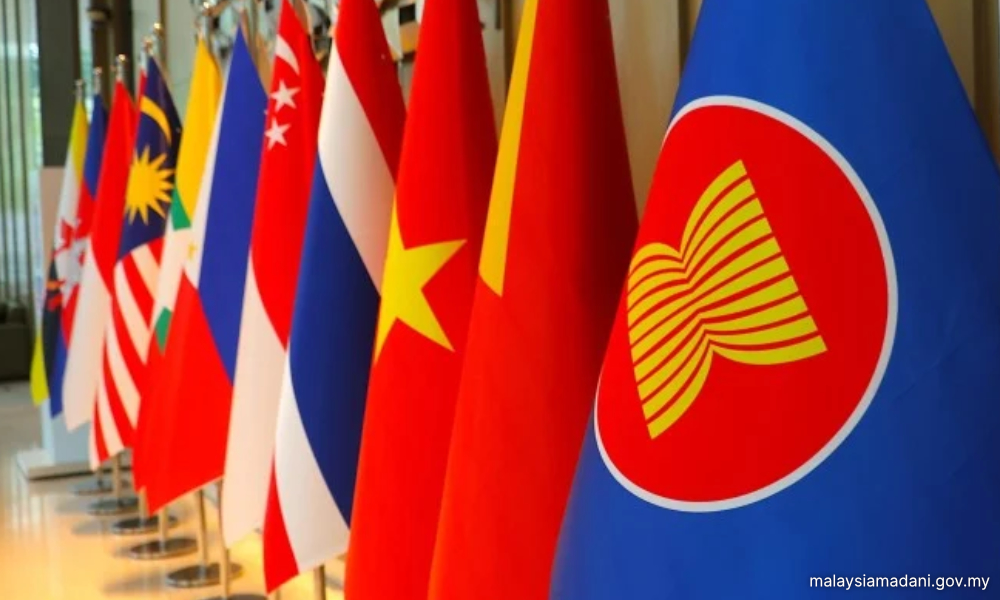
Saifuddin’s insistence on the Asean framework comes against a backdrop of rapidly deepening US-Philippine military ties that have unsettled the regional balance, with the two powers having this year planned broader security engagements.
Such moves could add another layer of complexity to the regional dynamics.
During his tenure as the foreign minister, Saifuddin had met his Chinese counterpart Wang Yi, with both sides agreeing to set up a bilateral consultation mechanism for maritime issues and a new platform for dialogue and cooperation.
/file/publisher-c1a3f893382d2b2f8a9aa22a654d9c97/2026/06/6eba9dd8d09d86968356764794e4f33a.jpg)
/file/publisher-c1a3f893382d2b2f8a9aa22a654d9c97/2026/06/fa1f3e342ce7f1ea081a05f042259b78.jpg)
/file/publisher-c1a3f893382d2b2f8a9aa22a654d9c97/2023/12/ae7d405554d2c179d9e0ff93567283c8.jpg)
/file/publisher-c1a3f893382d2b2f8a9aa22a654d9c97/2023/11/25f3afda1bf57cdea4481204dc7265dd.jpg)
/file/image/76954444_605.jpg)
/file/publisher-c1a3f893382d2b2f8a9aa22a654d9c97/2025/02/5fb497c31bd5621b91e2aa478a2a324b.jpg)


Are you sure you want to delete this comment?
This action cannot be undone.